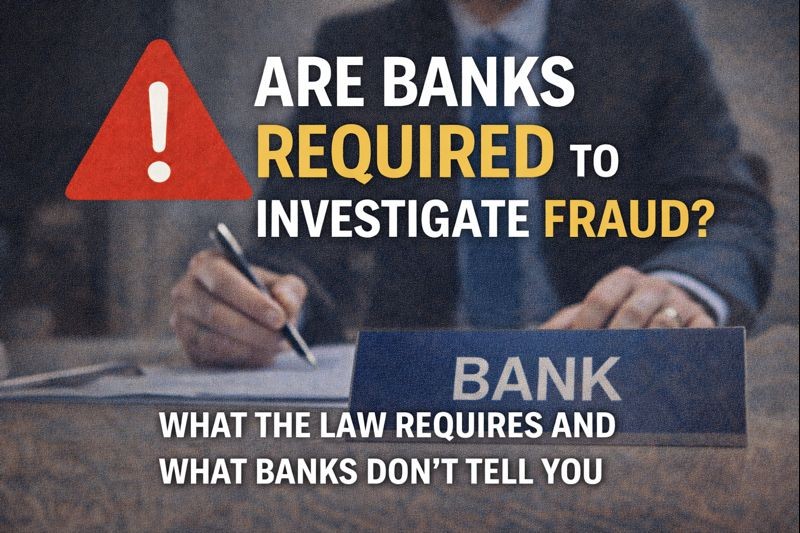
Many consumers assume banks can decide whether or not to investigate fraud. That is not true. Under federal law, banks are legally required to investigate reports of fraud and unauthorized transactions. When a bank refuses to investigate—or performs a rushed, superficial review—it may be violating consumer protection laws.
If your bank told you it “verified” a fraudulent transaction without explanation, delayed your claim, or denied it automatically, you may have legal rights.
Yes — Banks Are Legally Required to Investigate Fraud
Banks are required to investigate fraud under multiple federal laws, depending on the type of transaction involved. These laws exist specifically to protect consumers from unauthorized activity and financial abuse.
When you report fraud, a bank cannot simply ignore your claim, dismiss it, or rely solely on automated systems. A real investigation is required.
Which Laws Require Banks to Investigate Fraud?
Electronic Fund Transfer Act (EFTA)
The Electronic Fund Transfer Act (EFTA) applies to unauthorized electronic transactions, including:
Debit card fraud
Unauthorized bank withdrawals
ACH fraud
Zelle and other electronic transfers
Under the EFTA, banks must:
Promptly investigate unauthorized electronic transactions
Conduct a good-faith and reasonable investigation
Correct errors when fraud is confirmed
Provide written explanations for denials
A bank cannot deny a claim simply because the transaction was electronic or instant.
Fair Credit Reporting Act (FCRA)
The Fair Credit Reporting Act (FCRA) applies when fraud affects your credit report, such as:
Fraudulent credit cards
Loans opened in your name
Identity theft accounts
Incorrect reporting of unauthorized charges
Under the FCRA, banks and credit bureaus must:
Conduct a reasonable investigation
Review relevant evidence
Correct or delete inaccurate information
Stop reporting fraud once verified as inaccurate
“Verified” responses without real investigation may violate the FCRA.
What Counts as a “Reasonable Investigation”?
A reasonable investigation is not:
An automated system check
A form denial letter
A generic “we verified it” response
Ignoring evidence provided by the consumer
A reasonable investigation must include:
Review of transaction history
Analysis of account access and activity
Consideration of identity theft indicators
Evaluation of consumer statements and documentation
A genuine determination of authorization
If a bank cannot explain how it investigated, the investigation may not be lawful.
Common Ways Banks Fail to Investigate Fraud Properly
Many banks fail consumers by:
Denying claims without reviewing evidence
Blaming the customer by default
Relying only on IP addresses or device data
Ignoring identity theft reports
Failing to document investigation steps
Using boilerplate denial language
These practices are widespread—and legally risky for banks.
What If a Bank Refuses to Investigate or Denies Fraud Anyway?
If your bank refuses to investigate fraud or denies your claim improperly, you should:
Request a written explanation of the denial
Ask for investigation documentation
File an identity theft report at IdentityTheft.gov
Dispute fraudulent activity in writing
Preserve all communications with the bank
A refusal to investigate or a sham investigation may expose the bank to legal liability.
Can You Take Legal Action If a Bank Fails to Investigate Fraud?
Yes. When a bank violates the EFTA or FCRA, consumers may be entitled to:
Reimbursement of stolen funds
Correction of credit reporting
Statutory damages
Attorney’s fees and costs
In many cases, the law requires the bank to pay the consumer’s attorney fees, making legal action accessible even when losses seem small.
Final Thoughts: Banks Do Not Have Unlimited Discretion
Banks often act as though fraud investigations are optional. They are not.
If you reported fraud and your bank failed to investigate properly, denied your claim without explanation, or blamed you unfairly, your rights may have been violated.
The Credit Attorney helps consumers enforce their rights, challenge improper fraud denials, and hold banks accountable when they fail to follow the law.