Example of Credit Reporting Errors
Many consumers believe that once a debt is forgiven or settled, it should no longer appear as unpaid on their credit report.
But what happens when a forgiven debt continues to be reported as a collection account?
This situation occurs more often than people realize. When companies fail to update credit reporting after a debt has been waived, it can leave consumers with inaccurate credit reports that continue to harm their financial opportunities.
A recent case illustrates how serious this issue can be.
When a Debt Is Forgiven but Still Reported as Owed
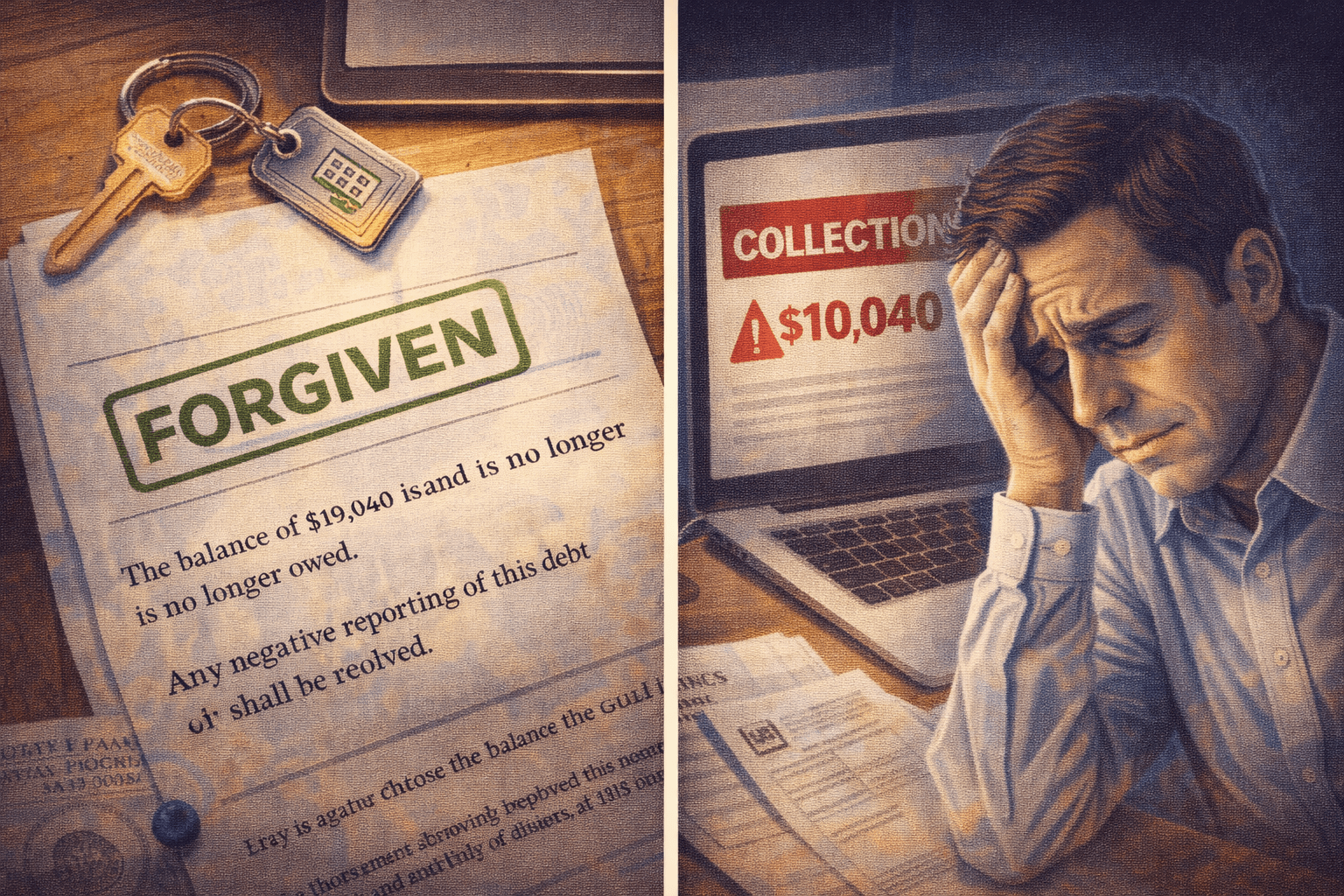
In this case, a consumer had a past-due balance from a 2017 apartment lease. Years later, in 2022, the property’s original owner formally forgave the debt and provided a written letter confirming that:
The balance had been waived
The debt was no longer owed
Any negative credit reporting related to the account would be inaccurate
At that point, the issue should have been resolved.
However, the account continued to appear on the consumer’s credit report as an unpaid collection account.
Disputes Submitted With Proof — But Ignored
The consumer, through an authorized representative, submitted multiple disputes to address the issue.
These disputes included:
The written debt forgiveness letter
A notarized authorization allowing the representative to act on the consumer’s behalf
Formal disputes sent to both the credit reporting agencies and the debt collector
The disputes clearly explained that the debt had been forgiven and should no longer appear as owed.
Despite this documentation:
The debt collector continued reporting the account
Credit bureaus continued listing the debt as unpaid
One credit reporting agency failed to respond entirely
Others verified the account as “accurate”
Common Searches Related to This Problem
Consumers dealing with similar situations often search for:
“debt forgiven but still on credit report”
“collection account not removed after payoff or forgiveness”
“credit report showing debt I don’t owe anymore”
Failure to Conduct a Proper Investigation
Even though documentation clearly showed the debt had been forgiven, the companies involved failed to conduct a meaningful investigation.
Instead, they continued reporting the account as valid, leaving inaccurate and misleading information on the consumer’s credit report.
When inaccurate information remains on a credit report after a dispute, it can continue to affect how lenders evaluate a consumer’s creditworthiness.
Real Consequences of Reporting a Forgiven Debt
Because the inaccurate reporting remained on the credit report, the consumer experienced several real-world consequences, including:
Damage to his credit score
Denial of credit by a major lender
Emotional distress and embarrassment
Fear of applying for credit due to expected rejection
Consumers facing these problems often search for:
“denied credit because of collection account error”
“how to fix inaccurate credit report collections”
Why This May Violate the Law
Under the Fair Credit Reporting Act (FCRA), credit reporting agencies and companies that furnish information must:
Report accurate and complete information
Conduct a reasonable investigation after receiving a dispute
Correct or delete information that is inaccurate or cannot be verified
Additionally, continuing to report or attempt to collect a debt that has already been forgiven may violate federal debt collection laws and applicable state consumer protection laws.
What You Should Do If a Forgiven Debt Is Still on Your Credit Report
If a debt you no longer owe is still being reported on your credit report, consider taking the following steps.
1. Dispute the Account Immediately
Explain that the debt has been forgiven and clearly describe why the account should no longer be reported.
2. Provide Written Proof
Include documentation such as:
Forgiveness or settlement letters
Written confirmation that the balance is $0
Any correspondence confirming the account was resolved
3. Follow Up and Keep Records
Keep copies of all disputes, responses, and supporting documentation.
Monitoring your credit reports can help ensure the issue is eventually corrected.
The Bottom Line
A forgiven debt should not continue to harm your credit.
When companies fail to update credit reporting after receiving clear proof that a debt has been waived, it can cause serious financial and personal consequences.
If your credit report shows a debt that has already been forgiven or waived, or a debt collector continues reporting inaccurate information, The Credit Attorney may be able to help review your situation and explain your legal options.
Frequently Asked Questions
Which credit bureaus maintain consumer credit reports?
Most consumer credit reports in the United States are maintained by three major credit reporting agencies:
Experian
Equifax
TransUnion
These companies collect credit information from lenders and other businesses and provide credit reports to lenders, landlords, and other entities that evaluate creditworthiness.
Consumers are entitled to request a copy of their credit report from each of these agencies.
Should a forgiven or settled debt still appear on a credit report?
In some situations, a settled or forgiven debt may still appear on a credit report, but it should be reported accurately. If a debt has been waived or forgiven, it generally should not continue to appear as an unpaid collection balance.
Can a collection account hurt my credit score?
Yes. Collection accounts can significantly impact a consumer’s credit score and may affect a lender’s decision when reviewing credit applications.
What should I do if a debt I no longer owe appears on my credit report?
If a credit report shows a debt that has already been forgiven or resolved, you may consider submitting a dispute with the credit reporting agencies and providing documentation showing the balance is no longer owed.
Keeping copies of all disputes and responses may help resolve the issue.