Credit reports are supposed to reflect accurate financial information. But what happens when they don’t?
In some situations, credit reports may contain errors that make a consumer appear riskier to lenders than they actually are.
A recent case highlights two common but serious credit reporting problems:
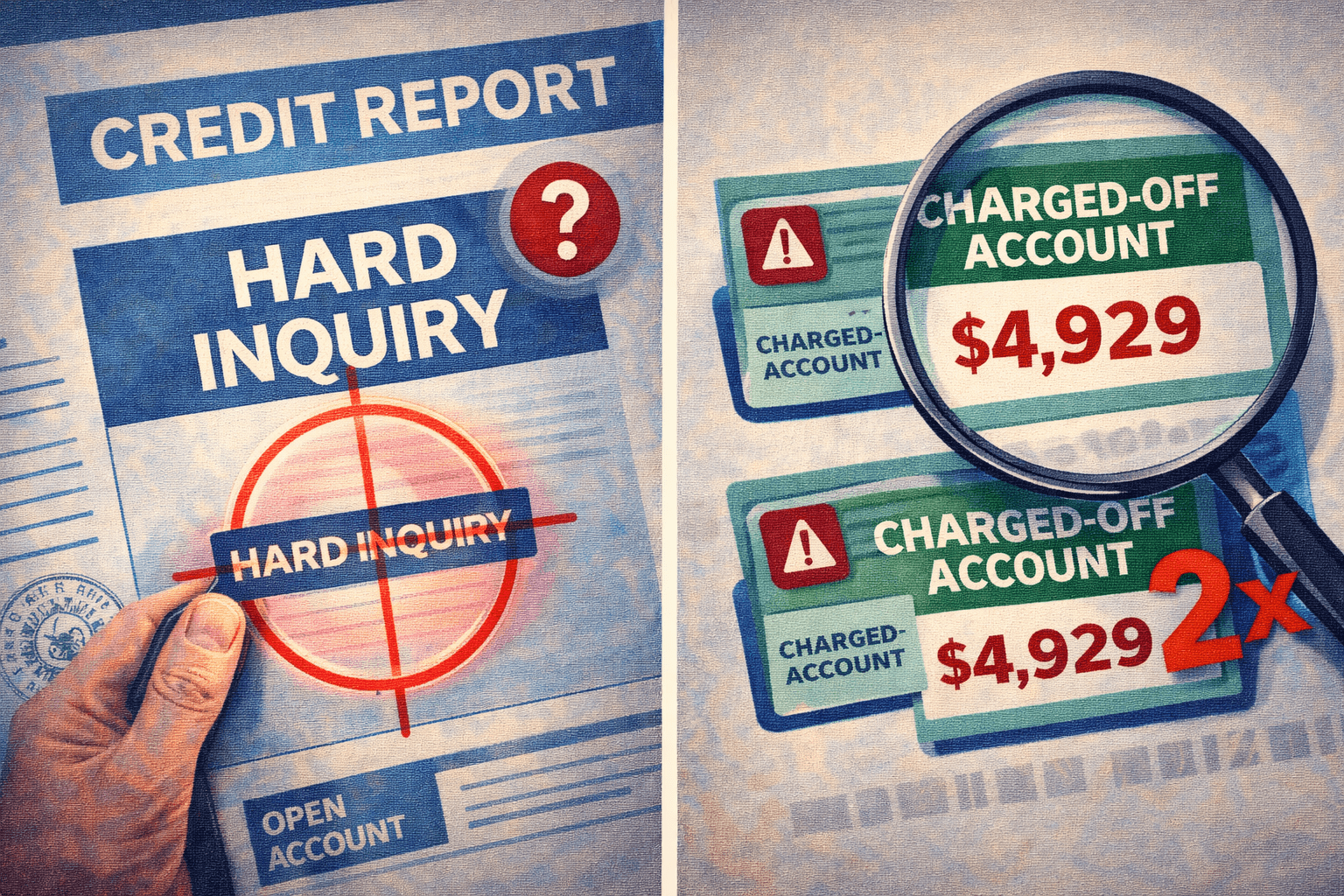
A hard inquiry for credit that the consumer never applied for
A duplicate charged-off account that made the consumer’s debt appear twice as large
Both types of errors can significantly harm a consumer’s credit score and financial opportunities.
Hard Inquiry Reported Without a Credit Application
In this case, a consumer reviewed his credit report and discovered a hard inquiry listed for a credit application he never submitted.
A hard inquiry usually appears when a consumer applies for credit, such as a loan or credit card. Hard inquiries can slightly lower a credit score and may signal to lenders that a consumer is actively seeking credit.
After contacting the company listed on the report, the consumer learned that:
Only a soft inquiry had been performed
No credit application had been submitted
Consumers frequently search for issues like this using phrases such as:
“hard inquiry on credit report I didn’t authorize”
“unauthorized credit check on my report”
“difference between hard and soft inquiry credit”
Disputes Ignored Despite Clear Evidence
The consumer sent multiple dispute letters to the credit reporting agency over several months.
Despite providing clear documentation that the inquiry was inaccurate:
The incorrect hard inquiry remained on the credit report
The agency failed to conduct a meaningful investigation
Automated responses were provided instead of a proper review
Duplicate Account Reporting Made the Debt Appear Higher
In addition to the inquiry issue, the consumer discovered another serious error.
The same credit account was being reported twice, with each listing showing the same balance and marked as charged-off.
This made it appear as though the consumer owed double the actual amount.
Consumers often search for this problem using phrases such as:
“duplicate accounts on credit report”
“same debt listed twice credit report”
“charged off account reported twice”
Repeated Disputes With No Correction
The consumer disputed the duplicate account several times and explained that:
Only one account existed
The second listing was incorrect and duplicative
Despite these disputes:
The credit bureau failed to correct the error
The company reporting the debt continued verifying the information as accurate
Real Impact of These Credit Report Errors
Errors like unauthorized inquiries or duplicate accounts can have serious consequences.
In this case, the consumer experienced:
A drop in credit score
Emotional distress, including stress and anxiety
Sleepless nights
Time and money spent attempting to fix the errors
Even small inaccuracies on a credit report can create long-lasting financial problems.
Why These Errors May Violate the Law
Under the Fair Credit Reporting Act (FCRA), credit reporting agencies and companies that furnish information to credit bureaus must:
Report accurate and complete information
Conduct a reasonable investigation after receiving disputes
Correct or remove inaccurate information
Failing to correct issues such as:
Unauthorized hard inquiries
Duplicate or inflated debts
may violate federal law and California consumer protection laws.
What You Should Do If You See These Errors on Your Credit Report
If your credit report shows a hard inquiry you did not authorize or duplicate accounts, consider taking the following steps.
1. Dispute the Errors Immediately
Clearly explain what information is incorrect and why.
2. Provide Supporting Evidence
Include documents such as:
Written confirmation from the creditor
Account statements
Copies of prior dispute results
3. Monitor Your Credit Report
Continue checking your credit reports and keep copies of all responses.
The Bottom Line
A hard inquiry you never authorized or a duplicate account appearing on your credit report can seriously damage your credit and financial opportunities.
If inaccurate inquiries or duplicate debts remain on your credit report despite disputes, you may have legal rights under federal law.
The Credit Attorney helps consumers address credit reporting errors and hold companies accountable when inaccurate information harms their credit.
Frequently Asked Questions
Which credit bureaus maintain consumer credit reports?
Most consumer credit reports in the United States are maintained by three major credit reporting agencies:
Experian
Equifax
TransUnion
These companies collect credit information from lenders and other businesses and provide credit reports to lenders, landlords, and other entities that evaluate creditworthiness.
Consumers are entitled to request a copy of their credit report from each of these agencies.
What is the difference between a hard inquiry and a soft inquiry?
A hard inquiry typically occurs when a consumer applies for credit and may slightly impact a credit score. Examples include applying for a mortgage, auto loan, or credit card.
A soft inquiry occurs when credit information is reviewed for other purposes, such as background checks or pre-approved credit offers, and usually does not affect a credit score.
Can duplicate accounts on a credit report affect my credit score?
Yes. If the same debt is reported multiple times, it can make it appear that the consumer owes more debt than they actually do. This may negatively impact credit scores and influence lending decisions.
What should I do if I see an inquiry I didn’t authorize?
If you find an inquiry on your credit report that you did not authorize, you may consider contacting the company that made the inquiry and submitting a dispute with the credit bureaus explaining that you did not apply for credit.
Keeping copies of all communications and documentation may help resolve the issue.