Example of Credit Reporting Errors
If you were injured at work, your medical bills are generally supposed to be covered by workers’ compensation insurance — not sent to collections.
But what happens when a medical provider or debt collector reports those bills on your credit report anyway?
This situation occurs more often than many people realize. When medical bills related to workplace injuries are incorrectly treated as personal debt, it can damage a consumer’s credit and create unnecessary financial stress.
A recent case illustrates how workers’ compensation medical bills can end up on a credit report even when the consumer does not legally owe the debt.
Medical Bills That Should Have Been Covered
In this case, a consumer was injured on the job in May 2023 and began receiving medical treatment through the workers’ compensation system.
Because the injury occurred at work:
Medical expenses should have been covered by the employer’s workers’ compensation insurance carrier
The consumer should not have been personally responsible for the bills
Despite this, the consumer began receiving medical bills directly.
Later, the consumer discovered that the account had been sent to a debt collector.
Debt Collector Reported a Debt That Was Not Owed
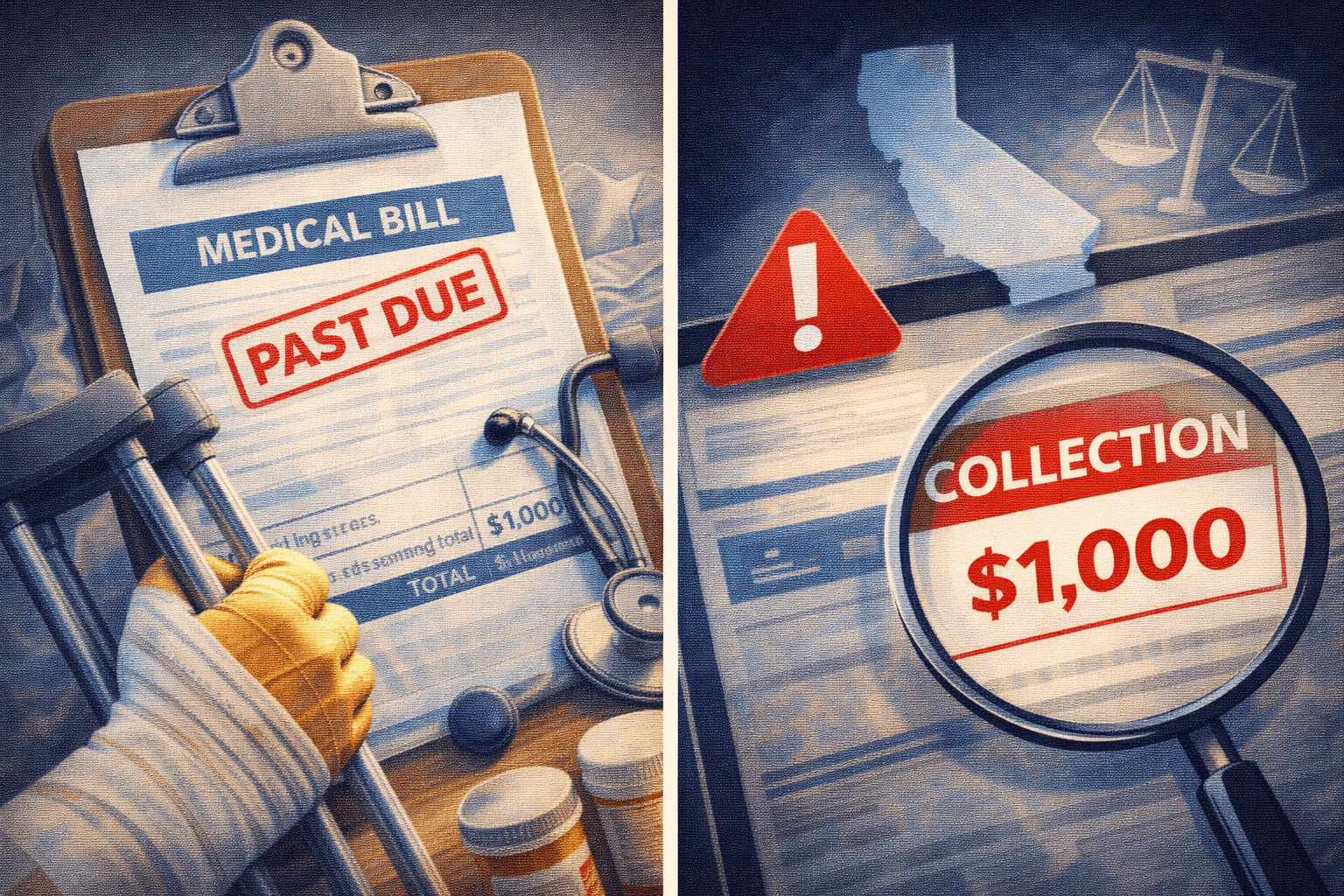
The debt collector reported the account to the credit bureaus, making it appear that the consumer owed more than $1,000 for medical treatment.
When accounts like this appear on a credit report, it can make it look as though the consumer has failed to pay legitimate medical debt.
Consumers frequently search for issues like this using phrases such as:
“workers comp medical bill sent to collections”
“do I owe medical bills from a work injury”
“medical debt on credit report workers compensation”
Notice Was Given — But Ignored
Before the account was reported, the consumer’s workers’ compensation attorney had already notified the medical provider that:
The injury was part of an accepted workers’ compensation claim
Payment responsibility belonged to the workers’ compensation insurance carrier
Despite this notice:
The provider continued billing the consumer
The debt collector continued collection efforts
The account remained on the consumer’s credit report
Disputes Filed — But the Error Remained
After discovering the account on his credit report, the consumer disputed the information and explained that:
The debt was related to a workplace injury
The balance was not personally owed
Even after receiving this information, the inaccurate reporting was not corrected.
Real Impact of Wrongful Medical Debt Reporting
Incorrectly reporting medical debt can have serious consequences.
Because of the inaccurate reporting, the consumer experienced:
Emotional distress and anxiety
Confusion about his financial obligations
Embarrassment over a debt he did not owe
Concern about long-term damage to his credit
Even a single collection account can negatively impact a consumer’s credit score and financial opportunities.
California Law Now Prohibits Medical Debt Reporting
California has recently taken major steps to protect consumers from the harmful effects of medical debt on credit reports.
Beginning January 1, 2025, California law generally prohibits credit reporting agencies from including medical debt on consumer credit reports.
This means that many medical collection accounts — including bills related to medical treatment — should not appear on a California consumer’s credit report at all.
When medical debt is still reported after this law took effect, it may raise additional legal concerns under California law.
Why This May Violate the Law
Under California workers’ compensation law, injured workers are generally not personally responsible for authorized medical treatment related to workplace injuries.
When medical providers or collectors attempt to collect those bills from the worker, it may violate state law.
Additionally:
Debt collectors generally cannot attempt to collect debts that are not legally owed
Credit reporting agencies must maintain reasonable procedures to ensure the accuracy of consumer information
Reporting workers’ compensation medical bills as personal debt — especially after receiving notice that the bills relate to a workplace injury — may violate both California consumer protection laws and the Fair Credit Reporting Act (FCRA).
What You Should Do If Workers’ Comp Bills Appear on Your Credit Report
If a medical bill from a work injury appears on your credit report, consider taking the following steps.
1. Dispute the Account Immediately
Explain that the charges are related to a workers’ compensation claim and that you are not personally responsible for payment.
2. Notify the Medical Provider and Debt Collector
Inform them that the bill should be directed to the workers’ compensation insurance carrier.
3. Keep Documentation
Save copies of medical records, claim details, and any communications related to the dispute.
Monitoring your credit reports can help ensure the account is corrected or removed.
The Bottom Line
Medical bills from a workplace injury should not appear on your credit report as personal debt.
When medical providers or debt collectors ignore workers’ compensation rules, it can create serious financial and emotional harm for injured workers.
With California’s recent law limiting the reporting of medical debt, many of these accounts should not appear on credit reports at all.
If your credit report shows medical debt you do not owe because of a workplace injury, The Credit Attorney may be able to help review your situation and explain your legal options.
Frequently Asked Questions
Which credit bureaus maintain consumer credit reports?
Most consumer credit reports in the United States are maintained by three major credit reporting agencies:
Experian
Equifax
TransUnion
These companies collect credit information from lenders and other businesses and provide credit reports to lenders, landlords, and other entities that evaluate creditworthiness.
Consumers are entitled to request a copy of their credit report from each of these agencies.
Is medical debt allowed on credit reports in California?
Beginning January 1, 2025, California law generally prohibits credit reporting agencies from including medical debt on consumer credit reports. This law was enacted to prevent medical bills from damaging consumers’ credit.
Can workers’ compensation medical bills be sent to collections?
In many situations, medical bills related to workplace injuries should be billed to the workers’ compensation insurance carrier rather than the injured worker. When those bills are incorrectly sent to collections, it may create legal issues under California law.
Can medical collections affect my credit score?
Yes. Collection accounts can negatively impact credit scores and may influence lending decisions when applying for loans, credit cards, or housing.