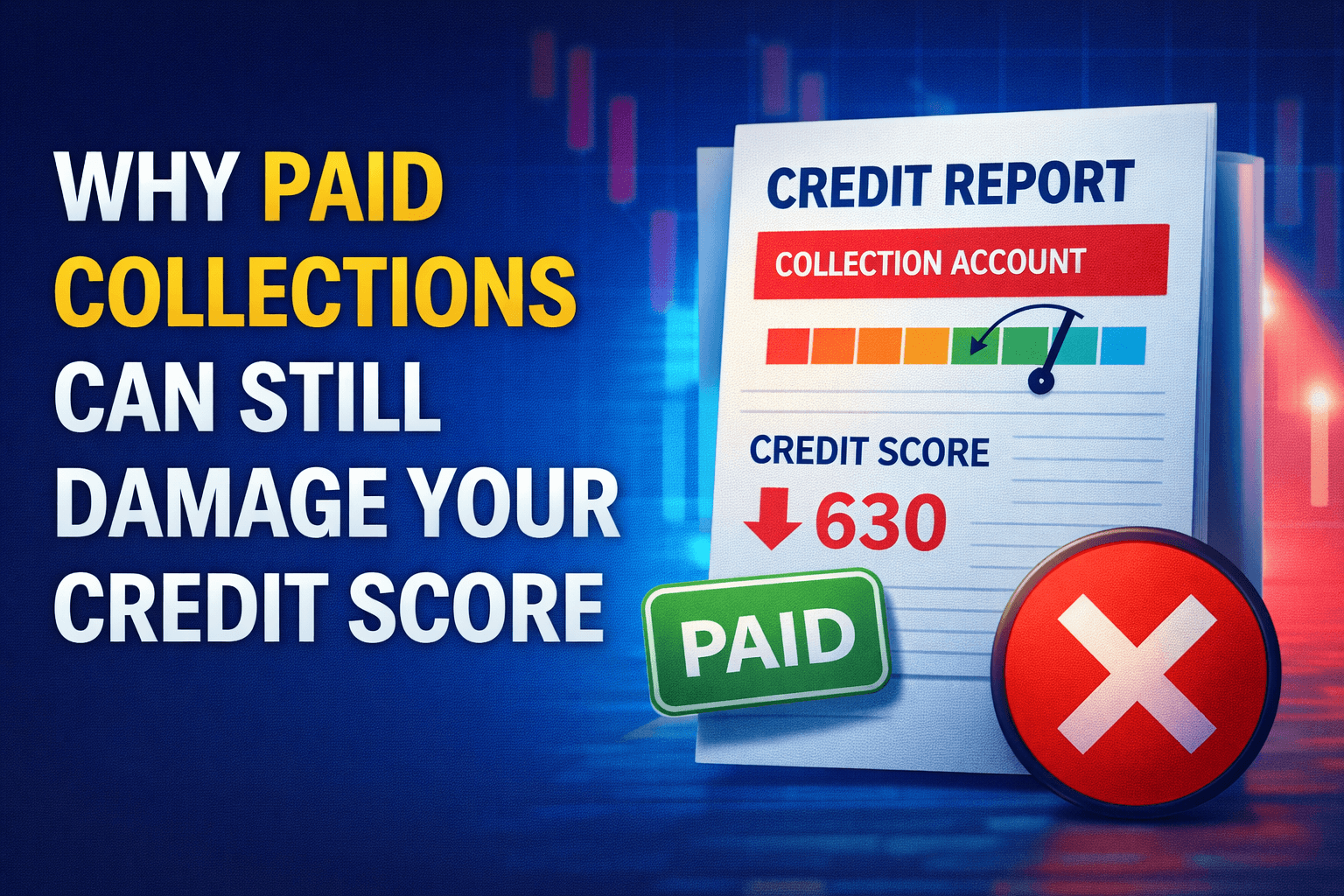
Many consumers believe that once a collection account is paid, it will immediately improve their credit score. Unfortunately, that is not always the case.
Even after a collection is paid, it can continue to negatively impact your credit depending on how it is reported and which scoring model is being used.
What Is a Collection Account?
A collection account is created when a creditor or service provider sends an unpaid debt to a third-party debt collector. Once this happens, the account is typically reported on your credit report as a derogatory item, which can significantly lower your credit score.
Paid vs. Unpaid Collections
Paying a collection account does change its status from “unpaid” to “paid,” but it does not remove the account from your credit report.
This means:
The negative mark can still remain for up to 7 years from the original delinquency date
Lenders can still see that the account went to collections
Your credit score may still be affected
Why Your Score May Not Improve
The impact of a paid collection depends on the credit scoring model being used:
Older models (like FICO 8):
Paid and unpaid collections are treated similarly, meaning paying the account may not significantly increase your score.Newer models (like FICO 9 and VantageScore 3.0+):
Paid collections may be ignored or have less impact, which can improve your score.
Because many lenders still use older scoring models, paying a collection does not always result in an immediate benefit.
The Difference Between Reporting and Scoring
It is important to understand the difference between credit reporting and credit scoring:
Credit report:
Shows the history of the account (including the collection)Credit score:
Calculates risk based on that information
Even if your report is updated to show a collection as “paid,” the scoring model may still treat it as a negative event.
When Paying a Collection Can Help
Although paying a collection may not always improve your score right away, it can still be beneficial:
Prevents further collection activity
Reduces the risk of a lawsuit
May improve how lenders view your application manually
Can help under newer scoring models
In some cases, consumers may also be able to negotiate a “pay-for-delete” agreement, where the collection account is removed entirely after payment. However, not all collectors agree to this.
What You Should Do Before Paying
Before paying a collection account, it is important to:
Verify that the debt is accurate
Confirm the amount is correct
Determine whether the account is still within the statute of limitations
Consider whether payment will meaningfully improve your credit situation
Paying an inaccurate or improperly reported debt can create additional issues.
When There May Be a Legal Issue
If a collection account is:
Inaccurate
Reported with the wrong balance
Duplicated
Not properly investigated after a dispute
it may violate the Fair Credit Reporting Act (FCRA) or other consumer protection laws.
Bottom Line
Paying a collection account does not automatically fix your credit. While it may help in some situations, the negative mark can still remain and continue to affect your score depending on the circumstances.
If a collection account on your credit report is inaccurate or not properly investigated, you may have legal rights. If the issue remains after a dispute, contact The Credit Attorney to review your case and help protect your rights.