Receiving a debt collection letter can be stressful, and many consumers choose to ignore it, hoping the problem will go away. Unfortunately, ignoring a debt collector can often make the situation worse.
Understanding what can happen — and what your rights are — is critical to protecting yourself.
What a Debt Collection Letter Means
A debt collection letter is usually the first formal attempt by a debt collector to contact you about an alleged debt.
This letter typically includes:
The amount of the debt
The name of the creditor
Your right to dispute the debt within 30 days
This is known as a validation notice, and it gives you an important opportunity to challenge the debt.
What Happens If You Do Nothing
If you ignore the letter, several things can happen:
1. Continued Collection Attempts
The collector may continue to contact you through:
Letters
Phone calls
Emails or text messages
Ignoring the issue does not stop collection efforts.
2. The Debt May Be Reported to Credit Bureaus
If it hasn’t already been reported, the collector may add the account to your credit report as a collection account, which can lower your credit score.
3. You May Lose Your Right to Easily Dispute
If you do not dispute the debt within the 30-day window, the collector may assume the debt is valid.
While you can still dispute later, you lose certain protections that apply during the initial validation period.
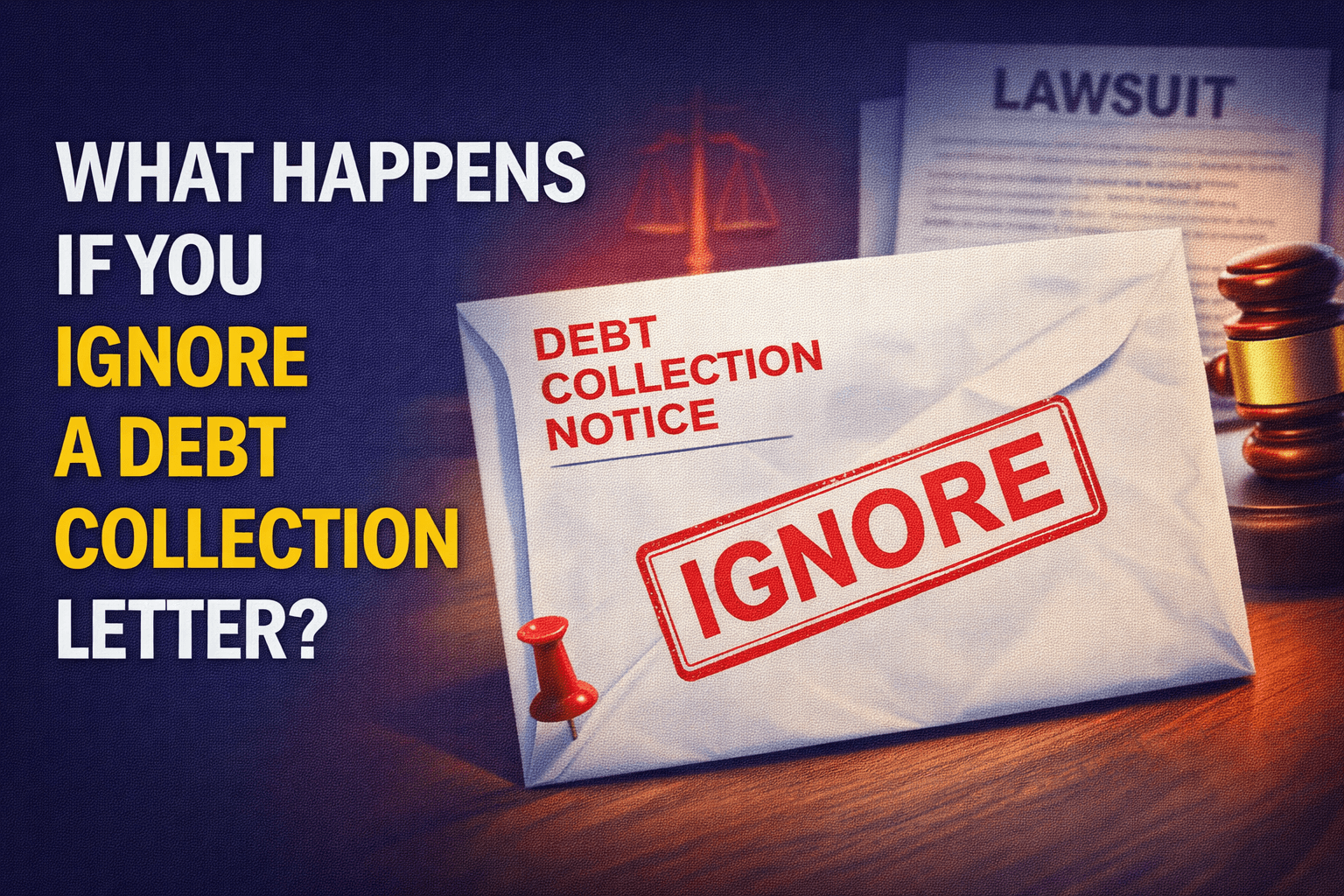
4. Risk of a Lawsuit
In some cases, the collector may file a lawsuit to recover the debt.
If you ignore a lawsuit:
You could receive a default judgment
The collector may gain the ability to garnish wages or levy bank accounts, depending on your state
When Ignoring Might Seem Tempting
Some consumers ignore collection letters because:
They believe the debt is too old
They think the amount is small
They assume the collector will give up
However, even older or smaller debts can still lead to credit reporting issues or legal action.
What You Should Do Instead
If you receive a debt collection letter, consider taking the following steps:
1. Review the Debt Carefully
Make sure:
The debt belongs to you
The amount is accurate
The dates make sense
2. Request Validation
If you are unsure about the debt, send a written request asking the collector to verify it.
3. Check Your Credit Report
See whether the account is already being reported and whether the information is accurate.
4. Dispute If Necessary
If the debt is incorrect, submit disputes with both the collector and the credit bureaus.
5. Keep Records
Save copies of all letters and communications.
When It Becomes a Legal Issue
A debt collector may be violating the law if they:
Attempt to collect a debt they cannot verify
Report inaccurate information
Misrepresent the amount or status of the debt
Engage in deceptive or unfair practices
Bottom Line
Ignoring a debt collection letter does not make the problem go away — and it can lead to more serious consequences, including credit damage and potential legal action.
Taking action early gives you the best chance to protect your rights and avoid unnecessary harm. If a collector is reporting inaccurate information or failing to properly validate a debt, contact The Credit Attorney to review your situation and protect your rights.