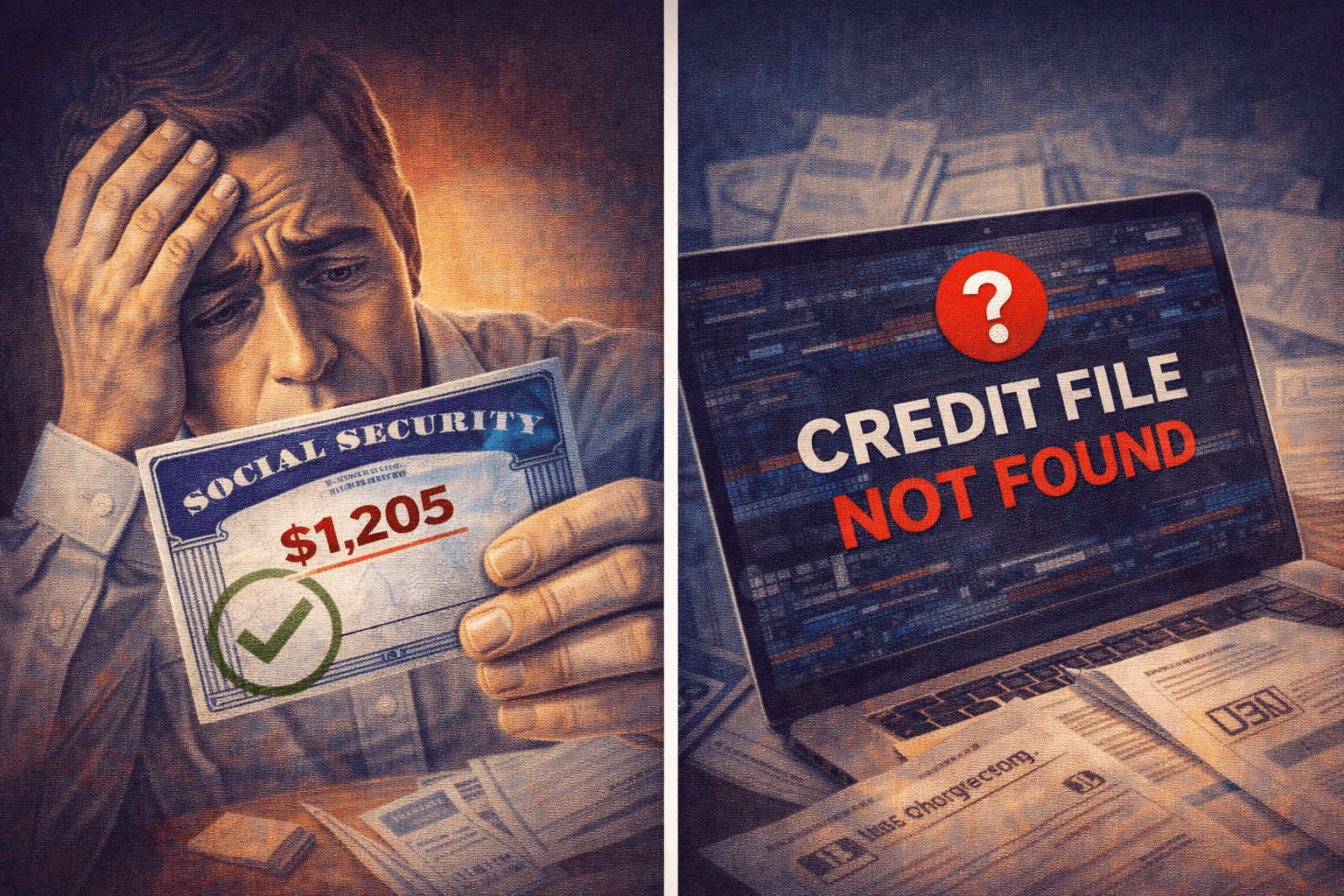
Imagine applying for a mortgage — only to be told that your Social Security number isn’t linked to your name, and that a credit bureau cannot even locate your credit file.
It may sound extreme, but this is a real issue that can completely block someone from obtaining credit, housing, or even basic financial services.
When a credit bureau cannot verify your identity or locate your file, lenders may be unable to access your credit history — even if you have established credit accounts.
When a Credit Bureau Can’t Verify Your Identity
In this case, a consumer attempted to get pre-approved for a mortgage in 2022 but immediately encountered a serious issue.
A credit reporting agency claimed that his name was not associated with his Social Security number and that it could not locate a credit file for him.
This triggered immediate concerns about identity theft and potential fraud.
Consumers frequently search for issues like this using phrases such as:
“credit bureau says no credit file found”
“SSN not matching credit report”
“why can’t a credit bureau verify my identity”
Repeated Attempts to Fix the Error — With No Resolution
Over the course of the next year, the consumer made numerous attempts to correct the problem.
He provided extensive documentation, including:
Government-issued identification
Social Security card
Passport
Utility bills
A police report
These documents were submitted multiple times by both fax and certified mail.
Despite following every instruction, the credit bureau repeatedly:
Claimed it did not receive the documents, or
Failed to respond at all
Credit Bureau Claims No File Exists
Eventually, the agency stated that it could not locate a credit file associated with the consumer.
The explanations offered were vague, including suggestions that:
The consumer may not have applied for credit recently
The consumer may not have a valid Social Security number
However, these explanations were clearly inaccurate because:
The consumer had active credit accounts
He was able to obtain credit reports from other credit reporting agencies
Why “Missing Credit File” Errors Can Happen
Situations like this may occur when a credit bureau’s systems fail to properly match identifying information.
Possible causes may include:
Incorrect or incomplete identifying data
Errors involving Social Security number matching
Identity verification flags within the bureau’s system
Internal database errors
When this happens, lenders may be unable to access a consumer’s credit history, even if the consumer has an established credit profile.
Real-World Consequences of a Missing Credit File
Because the credit bureau could not verify his identity, the consumer was unable to:
Obtain approval for a mortgage loan
Apply for rental housing
Move forward with basic financial plans
As a result, he and his family were forced to:
Continue living with relatives
Endure a long daily commute
Experience ongoing financial and emotional stress
Consumers facing similar situations often search for:
“can’t get a mortgage because no credit file”
“credit report missing or blank what to do”
“credit bureau error preventing loan approval”
Why This May Violate the Law
Under the Fair Credit Reporting Act (FCRA), credit reporting agencies must:
Maintain reasonable procedures to ensure maximum possible accuracy of consumer information
Conduct reasonable investigations when consumers dispute issues with their credit files
Provide consumers with access to their credit file upon request
When a credit bureau fails to properly maintain or locate a consumer’s credit file — especially after receiving documentation verifying the consumer’s identity — it may raise serious concerns under federal and California law.
What You Should Do If a Credit Bureau Can’t Find Your File
If a credit bureau claims it cannot verify your identity or cannot locate your credit file, consider taking the following steps.
1. Submit a Formal Dispute
Clearly explain the issue and include copies of your identification documents.
2. Send Documents by Certified Mail
Sending documents by certified mail helps ensure there is proof that the credit bureau received your information.
3. Request Your Full Credit File
Consumers have a legal right to access their credit information.
4. Compare Reports From Other Credit Bureaus
Review your reports from the other credit bureaus to determine whether the issue is isolated.
The Bottom Line
A credit bureau claiming you do not exist — or that it cannot locate your credit file — can prevent you from buying a home, renting an apartment, or accessing credit.
When credit reporting agencies fail to properly maintain consumer files or ignore repeated attempts to correct identity errors, consumers may have legal rights under federal law.
If you are dealing with a missing credit file, identity verification problems, or a credit bureau refusing to correct errors, The Credit Attorney may be able to help review your situation and explain your legal options.
Frequently Asked Questions
Which credit bureaus maintain consumer credit reports?
Most consumer credit reports in the United States are maintained by three major credit reporting agencies:
Experian
Equifax
TransUnion
These companies collect credit information from lenders and other businesses and provide credit reports to lenders, landlords, and other entities that evaluate creditworthiness.
Consumers are entitled to request a copy of their credit report from each of these agencies.
Can a credit bureau say that I have no credit file?
In some situations, a credit bureau may claim it cannot locate a credit file or cannot verify a consumer’s identity. This can happen due to data matching issues, identity verification flags, or internal system errors.
However, if a consumer has existing credit accounts, a credit bureau should generally be able to locate and maintain a file associated with that consumer.
What should I do if a credit bureau cannot verify my identity?
If a credit bureau claims it cannot verify your identity or cannot locate your credit file, you should consider submitting documentation confirming your identity, such as a government-issued ID, Social Security card, and proof of address.
Sending these documents by certified mail and keeping copies of everything submitted can help create a record of your efforts to resolve the issue.
Can credit reporting errors prevent me from getting approved for a mortgage?
Yes. If lenders cannot access your credit file or verify your identity through a credit bureau, they may be unable to approve applications for mortgages, auto loans, credit cards, or rental housing.
Inaccurate credit reporting or identity verification errors can have serious financial consequences for consumers.