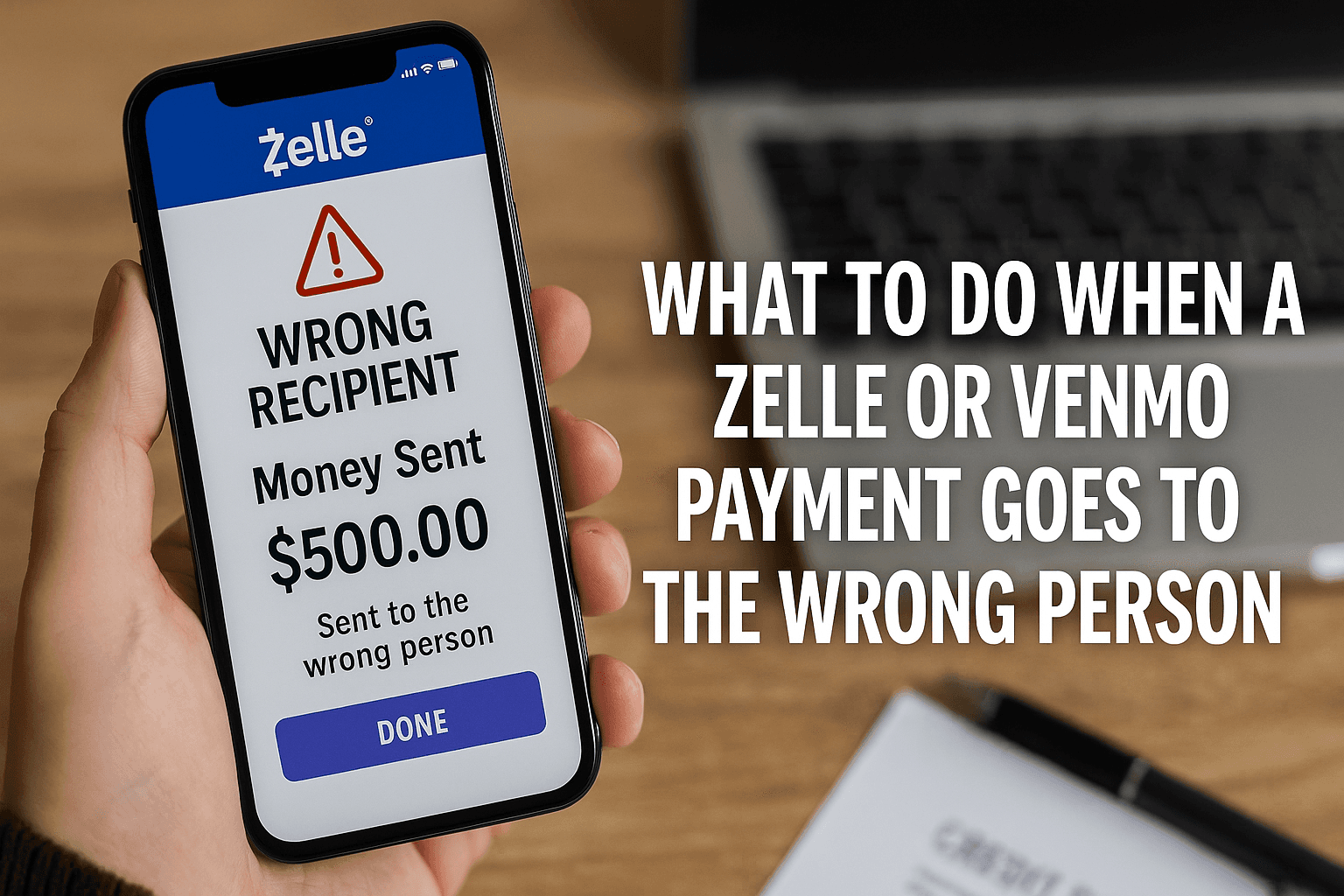
Sending money through apps like Zelle or Venmo has become second nature for millions of people. With just a few taps, you can pay a friend back for dinner or send rent to a roommate. But what happens if you accidentally send money to the wrong person—or worse, a scammer?
Unfortunately, once a digital payment is sent, getting your money back can be difficult. Still, there are important steps you can take to protect yourself and increase the chances of recovery.
1. Act Immediately
The moment you realize the payment went to the wrong person, act fast. Both Zelle and Venmo encourage users to contact the recipient directly (if you know them) and request a refund right away.
If that doesn’t work, report the issue through the app:
Zelle: Contact your bank or credit union directly. Zelle itself doesn’t hold your funds—your bank does.
Venmo: Open the transaction, tap “Need help?” or “Report a Problem,” and follow the instructions to contact Venmo support.
The quicker you act, the better your odds. Banks can sometimes flag or reverse pending transactions before they’re fully processed.
2. Notify Your Bank or Credit Union
Under Regulation E of the Electronic Fund Transfer Act (EFTA), banks must investigate unauthorized electronic transfers. However, there’s a key distinction:
If you were tricked or scammed into sending money (for example, believing you were paying a legitimate business), the transaction is generally considered authorized and may not be covered.
If your account was hacked and someone else sent money without your permission, that’s an unauthorized transaction, and your bank is required to investigate and reimburse you if it confirms fraud.
When you contact your bank, clearly explain whether the payment was unauthorized (fraud) or a mistake (wrong person). Request written confirmation of your report and keep copies of all correspondence.
3. File a Report with the Payment App
Both Zelle and Venmo have internal review teams that can flag accounts and block future transfers if the recipient is suspected of fraud. Provide:
Transaction details (date, amount, and recipient username or phone/email).
Screenshots of the payment confirmation.
Any messages or correspondence with the other party.
Venmo and Zelle may freeze suspicious accounts, and if enough reports are filed, they can sometimes assist in recovery.
4. File a Complaint with the CFPB or FTC
If your bank or the payment app fails to help, file a complaint with the Consumer Financial Protection Bureau (CFPB) or the Federal Trade Commission (FTC):
consumerfinance.gov/complaint
reportfraud.ftc.gov
These agencies can open investigations or refer your case to regulators overseeing your financial institution.
5. Report to Law Enforcement (If Fraud Is Involved)
If you suspect that you were tricked or scammed, file a police report and a fraud report with the FTC. This documentation is important if you later dispute the transaction or need to show your bank proof of fraud.
For scams involving fake buyers, impersonators, or online listings, include screenshots of any messages, ads, or profiles used to deceive you.
6. Prevent Future Mistakes and Scams
Once you’ve dealt with the immediate issue, take steps to protect yourself going forward:
Double-check recipient information (phone number, email, or username) before sending.
Only use Zelle and Venmo with people you know personally.
Enable multifactor authentication (MFA) for your bank and payment apps.
Set alerts for all outgoing transfers.
Be cautious of “payment reversal” scams where someone sends money, then claims it was a mistake.
Remember: Zelle and Venmo transfers are designed to be instant and irreversible—unlike credit card payments, they don’t have built-in fraud protection for mistaken or voluntary transactions.
If You Still Can’t Get Your Money Back
If your bank refuses to investigate or the app won’t help, you may have options under consumer protection laws. Financial institutions are still required to maintain fair and transparent processes when handling disputes.
If you’ve lost money due to unauthorized transfers or your bank refuses to assist, contact The Credit Attorney. Our firm can review your case, determine whether your rights under Regulation E or the Consumer Financial Protection Act were violated, and take action to hold the bank accountable.